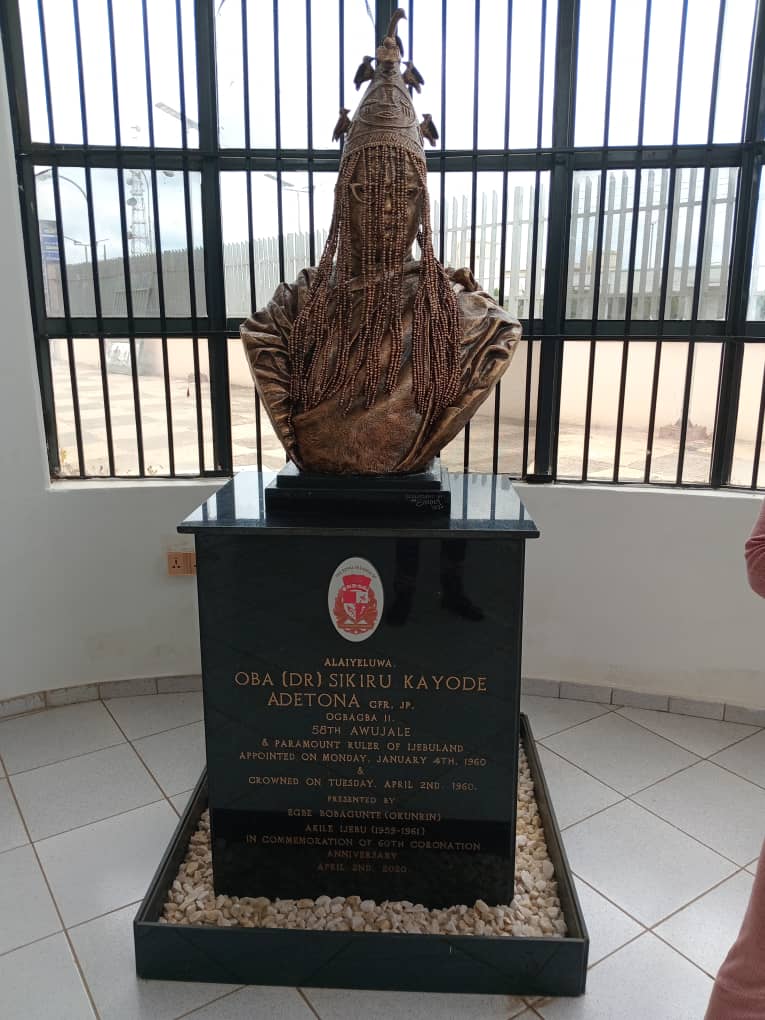
Monument Discourse
Monument can be referred to as structure or building that is built to honour a special person or
event, it can be an object espesially large and made of stone, built to remember and show
respect for a person, events or group of people, or a special place made for a purpose to
represent cultural or historical, political, architectural, religious, natural and artistic significance,
monument serve as a reminders of the past notable event in history.
The Federal Government of Nigeria, through Decree 77 of 1979, established the National
Commission for Museums and Monuments (NCMM) as a replacement to the Federal Antiquities
Department. In Nigeria, The National Commission for Museum and Monument NCMM was
established to manage the collection, documentation, conservation and presentation of
Nigeria’s National Cultural properties to the public for the purposes of Education, Enlightenment
and Entertainment. This Decree has now been re-enacted as NCMM Act, cap N19, Laws of the
Federation of Nigeria, 2004. The NCMM preserves, promotes and develops Nigeria’s cultural
heritage, manage national museums, artifacts, architecture and historical sites.
Nigeria has 65 sixty five national monuments across the country 2 two UNESCO world heritage
sites, while one hundred await legislative declaration as a national monument.
- Chief Okoroji’s House, Arochukwu Abia State
- Obu House, Elu Ohafia Abia State
- Chief Ochu Kalu’s House, Ndi Okereke Abam, Abia state
- Omo Ukwu of Ndi Nzera Clan Asaga-Ohafia, Abia State
- Sukur Cultural Landscape, Madagali, Adamawa State
- Gidan Madaki In Kafin Madaki, Bauchi State
- Dutsen Damisa Rock Painting Near Gumje, Bauchi State
- Dutsen Zane Geji, Rock Paintings , Toro, Bauchi State
- Shadawanka Rock Paintings, Bauchi State
- Shira Rock Paintings At Shira, Bauchi State
- The Cairn Of Stones At The Foot Of Panshanu Pass, Near Mile 31 On The Jos-Bauchi Road
- Known As Kwandonkaya, Toro, Bauchi State
- First Mining Beacon, Tilden Fulani, Bauchi State
- Rabeh’s House/Fort, Dikwa Borno State
- The Old Residency, Calabar, Cross Rivers State
- The Old Consulate, Calabar, Cross Rivers State
- Chief Egbo Bassey’s House, Calabar, Cross Rivers State
- Carved Stone Monoliths At Alok, Cross Rivers State
- Carved Stone Monoliths at Emaghabe, Cross Rivers State
- Palace of Chief Nanna Of Koko, Delta State
- Chief Ogiamen’s House, Benin City, Edo State
- Chief Aikoriogie’s House, Enogie of Obazagbon, Edo State
- Benin City Walls and Moat, Benin City, Edo State
- Chief Nwokolo’s House at Ukehe, Enugu State
- Rock paintings at dutsen habude, birnin kudu, jigawa state
- Rock Paintings at Dutsen Murufu, Birnin Kudu, Jigawa State
- Rock Inscriptions, Gong and Shelter at Dutsen Mesa Birnin Kudu, Jigawa State
- Rock Paintings at Dutsen Zango Birnin Kudu, Jigawa State
- Zaria City Walls, Zaria, Kaduna State
- Kufena Hills, Near Zaria, Kaduna State
- Steel foot Bridge, Built by Lord Lugard, Kaduna State
- Habe Mosque at Maigana, kaduna State
- Habe Mosque at Bebeji, Kano State
- Gidan Makama, Kano State
- Kano City Walls and Gate, Kano State
- Gobirau minaret, katsina state
- The Tumuli and Baobab Tree Known as Durbi-Takusheyi, Katsina State
- Old Katsina Training College, Katsina State
- Ojogwu Atogwu Tumulus near the Palace of the Attah of Idah, KOGI state
- Relics of the Steamer “Dayspring” at Jebba Station, Kwara State
- Old West African Frontier Force Fort at Okuta, Kwara State
- Old West African Frontier Force Fort at Yashikera, Kwara State
- Stone Figures at Ofaro, Kwara State
- Stone Figures at Ijara, Kwara State
- Ilojo Bar, Lagos Island, Lagos State
- Iga Idunganran (Oba’s Old Palace), Lagos Island, Lagos State
- Water House, Lagos Island, Lagos State
- Old Secretariat, Marina, Lagos State
- Tsoede’s Tomb At Gwagwade, Niger State
- Site of Mai Jimina’s House at Wushishi, Niger State
- Ruins and Site of colonial Government House at Zungeru, Niger State
- The Katamba of the Palace of Etsu Nupe, Mohammed at Bida, Niger State
- Sungbo’s shrIne at Oke-Eri, Near Ijebu-Ode, Ogun State
- Igbara Oke Petroglyphs, near Igbara Oke, Ondo State
- Iwo Eleru Cave, Near Owo, Ondo State
- The Old Palace of The Deji Of Akure, Ondo State
- River-Side Shrine and Sacred Grove Of Osun, Osogbo, Osun State
- Shrine of Osun in the King’s Market at Osogbo, Osun State
- Shrine of Osun at Afin Ata-Oja (Palace), Osogbo, Osun State
- Ita Yemoo at Ile-Ife, Osun State
- Carved Stone Figure at Igbajo, Osun State
- Stone Causeway at Batura, Bokkos, Plateau State
- King Jaja’s Statue at Opobo, Rivers State
- Ruins of Ancient City of Surame, Sokoto State
- Stone causeway at Tading ,Bokkos, plateau state
CRITERIA FOR DECLARATION OF A HERITAGE SITE AS A NATIONAL MONUMENT.
To declare a Heritage site as a national monument, it is important for it to meet certain criteria
that shows it’s cultural, historical, or natural significance.
The National Commission for Museums and Monuments has the statutory right to nominate a
Heritage site for declaration as a national monument. In pursuit of this legal objective the
commission, through the department of monuments, heritage and site coordinates this exercise.
These criteria can be grouped under the following
(A.) Cultural significance The site must represent a masterpiece of human creative genius that
showcase exceptional architecture, art, or craftsmanship.
Importance interchange of human values
The site should exhibit an important interchange of human values over a span of time within a
cultural area.
Unique testimony to a cultural tradition.
The site should bear a unique or at least exceptional testimony to a cultural tradition to a
civilization which is living or which has disappeared
Direct association with an event or a tradition
The site should be directly or tangibly associated with events or living traditions with ideas,
beliefs, or with artistic and literary works of understanding universal significance.
(B.) Architectural and landscape significance
Outstanding exchange of building type.
The site should be an example of an outstanding of type of a building, architectural or
technological attainment or landscape, which illustrate significant stages in human history.
Traditional human settlement
The site should be an outstanding example of a traditional human settlement land-use, sea-use,
which is a representative of a culture or human interaction with the environment, e.g. Oke
Idanre Cultural landscape.
(C.) Natural significance
Superlative natural phenomenon
The sites should contain superlative natural phenomena or areas of exceptional natural beauty
and aesthetic importance.
Outstanding Example of Earth’s history.
The sites should be an outstanding example representing major stages of Earth’s history, including Ecological marine record and of biological life, processes.
The site should be an outstanding example representing significant ongoing ecological and
biological processes in the evolution and development of normal terrestrial. Freshwater, coastal and ecosystems and communities of plants and animals.
Important natural habitat the site should contain the most important and significant natural
habitat for in-situ conservation of biological diversity, including those containing threatened
species of outstanding universal value .
STEP-BY-STEP PROCEDURE FOR DECLARING A HERITAGE SITE AS A NATIONAL MONUMENT.
Step 1: Property identification
Identify a potential heritage site that meet the criteria for a proposed National Monument, e.g.
name of Heritage site, photograph of the Heritage site, description of the Heritage site, etc.
Conduct preliminary research assessment to determine the site’s cultural, historical, or natural
significance
Gathered detailed documentation and research on the site, including its history, architecture,cultural ,significance and current
condition.
Conduct thorough archival research, field surveys and interviews with stakeholders and local
communities. Conduct an archaeological investigation of the site to determine its age of the site.
Step 3: Evaluate the site’s Evaluation significance using and established criteria Assessment and guidelines.
Access the site condition, threats and potential risks to its preservation.
Step 4:Nomination Prepare a nomination dossier that includes detailed information about the site, its significance
and justification for declaration as a National Monument. Submit the nominations to the Federal
Government for approval.
Step 5: Review and Evaluation.
The heritage authority reviews the nomination and conducts a thorough evaluation of the site’s
significance and integrity.
Experts and stakeholders may be consulted to provide input and feedback.
Step 6: Public Consultation and Engagement NCMM must conduct public consultations with the
local communities, stakeholders and other interested parties.
Gather feedback and input to ensure that the whole process is transparent and inclusive.
A notice for nomination for the declaration of the heritage shall be pasted on the walls of the heritage site as a proposed National
Monument for 3 months.
Advertisement in major National Newspapers for the benefit of the general public.
Step 7: Designation as a Proposed National Monument.
If the sides meet the criteria and have undergone a thorough evaluation, the (NCMM), National
Commission for Museums and Monuments may designate it as a proposed National Monument.
The designation is usually formalized through administrative process involving the NCMM, and the Federal Ministry Step 8: Protection of Culture and Creative
Arts.
Conservation.
NCMM must develop and implement a conservation management plan to protect the site’s
cultural, historical or natural significance.
Ensure that the site is managed and maintained in such a way that it will preserve its originality.
Integrity, authenticity, e.g. the values of the Heritage Site that qualify it for nomination.
Conclusion
There is need for government to partner with private investors on public private partnership for
the development of the Nigeria cultural sector, there should me injections of more fund to this
sector for effective facelift of the national monuments across the country, there should be
diversification of Nigeria economy from oil mono economy dependent. Government at all level
should appoint technocrats with technical knowledge high as head of cultural agencies and
parastatals for effectiveness of such agencies.